Free Advice For Priceless Security

Potential Threat : One of the techniques that hackers use to infiltrate operating systems is known as polymeric downloaders. These are viruses that could download other, more complex viruses, password stealers or remote…
Potential Threat: One of the techniques that hackers use to infiltrate operating systems is known as polymeric downloaders. These are viruses that could download other, more complex viruses, password stealers or remote controlled software. These downloaders typically access systems via emails or zip files. They can also get to your computer in tandem with other programs, mostly together with free game downloads or with illegal software. These downloaders can also traverse when connecting infected USB disks to your computer. Virus authors aim to trick you into executing these downloaders. These tricks could be sophisticated, which sometimes could confuse even sophisticated computer users into executing the underlying viruses and infecting their systems. A more complex infecting technique is called polymorphic downloaders or polymorphic viruses, which allows viruses to traverse undetected.
Polymorphic downloaders have ability to change their form every time they infect host systems. Advanced infection techniques allow hackers to divide the virus body in ever-changing code fragments which are implanted in what are called code caves. The actual virus functionality gets reassembled only during the point of execution. This allows polymorphic viruses to exist while avoiding detection by certain pattern based virus detection software programs. Such viruses only can be detected using behavior detection techniques.
Here are some free tools that could be used to scan your computer for potential infections:
- Windows Vista, 7 and 8
- Windows XP
- Windows XP SP2, 2003 SP2, Vista SP1, 2008, 7 and 8
- Windows 8.1, Windows 8, Windows 7, Windows Vista, and Windows XP
- Windows XP SP2 and above
- Windows XP, Windows Vista, Windows 7, Windows 8/8.1, Windows Server 2003, Windows Server 2008, and Windows Server 2008 R2
Please contact the Digital Edge security team if you have any comments or questions.
Updated November 2026: the original post is kept above; the sections below add context for readers today.
How this threat looks today
Downloaders are still the first stage of most infections. Today they usually arrive as a link or attachment in a convincing email, a fake software update or a malicious search ad, and they load ransomware or password stealers once inside.
The free scanners listed in 2015 were for old Windows versions. Current protection relies on behavior-based endpoint detection and response (EDR), which watches what programs do instead of matching known patterns.
- Keep Windows and applications updated and remove software nobody uses.
- Use EDR on every laptop and server, monitored around the clock.
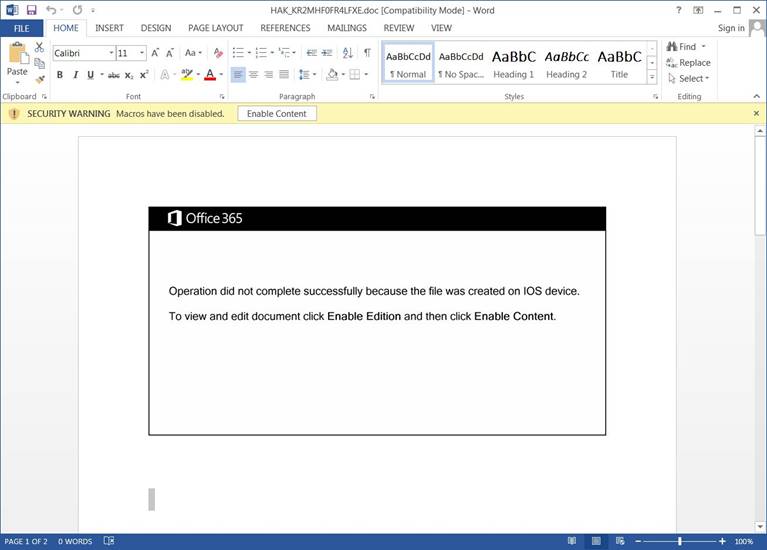
- Block macros from the internet and train people to report suspicious messages.
- Never run downloaded software from unknown sources or plug in unknown USB drives.
Digital Edge MDR combines endpoint detection with a 24×7 security team that investigates every alert.