October 11-17 – troubling week for the security

Digital Edge is committed to providing the highest levels of security within all the IT infrastructure environments under its care. In order to achieve this utmost goal for all of our clients, we continuously maintain…
Digital Edge is committed to providing the highest levels of security within all the IT infrastructure environments under its care. In order to achieve this utmost goal for all of our clients, we continuously maintain vigilance both on the productive side of IT as well as on its destructive side. We thus send out news and security bulletins such as this one from time to time to ensure that our clients are informed and educated on any important developments in IT security and are fully aware of what we are doing to ensure that we and our clients are always at the Cutting and at the Digital Edge of technology.
- Please refer to Microsoft Security Bulletin at https://technet.microsoft.com/en-us/library/security/ms15-oct.aspx to learn about vulnerabilities and patches available. All Digital Edge managed or co-managed clients will be patched according to individual schedules.
- Even though Dridex is design to be a “stealth” virus, security companies are constantly working on new techniques to detect Dridex malware. If you don’t run antivirus or your antivirus was not recently updated, we suggest to verify that you are not affected by Dridex please use following free tools:
F-Secure
https://www.f-secure.com/en/web/home_global/online-scanner
McAfee
http://www.mcafee.com/uk/downloads/free-tools/stinger.aspx
Microsoft
http://www.microsoft.com/security/scanner/en-us/default.aspx
Sophos
https://www.sophos.com/en-us/products/free-tools/virus-removal-tool.aspx
Trend Micro
http://housecall.trendmicro.com/
If you feel that you need assistance from the Digital Edge Security team, please contact Danielle Saladis at dsaladis@DIGITALEDGE.NET or open a ticket through Digital Edge web site at https://www.digitaledge.net
Updated November 2026: the original post is kept above; the sections below add context for readers today.
What Dridex was
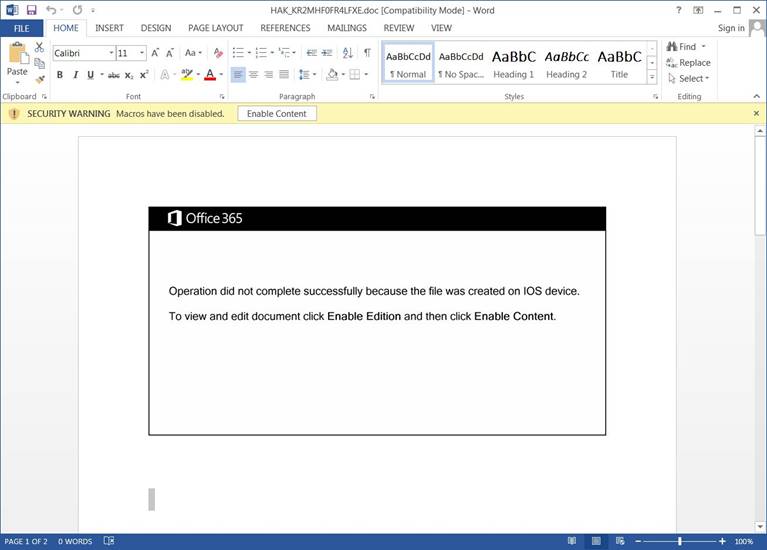
Dridex was a banking trojan spread through phishing emails with malicious Office macros. It stole online banking credentials, and in October 2015 the FBI and international partners announced a coordinated operation against its infrastructure. Its operators later moved on to ransomware, a path many malware families have followed since.
How to protect against the same tricks today
- Block Office macros in files from the internet (Microsoft now does this by default).
- Use behavior-based endpoint protection, monitored around the clock.
- Turn on multifactor authentication for banking and email, so stolen passwords are not enough.
- Patch every month and confirm that the patches were applied.
Digital Edge MDR watches endpoints, email and identity for exactly this kind of activity.